
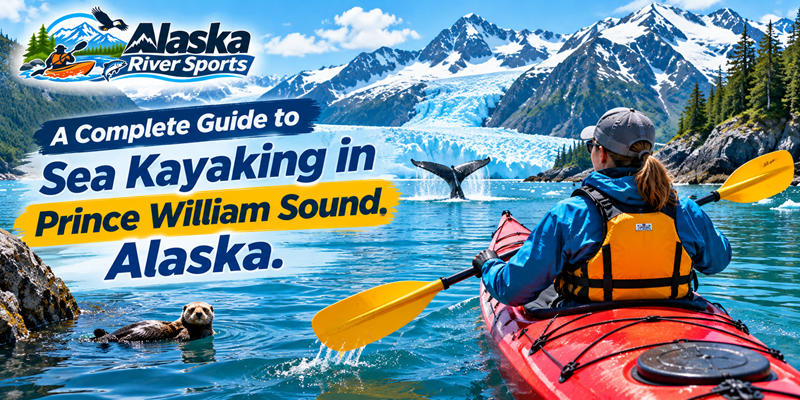
A Complete Guide to Sea Kayaking in Prince William Sound Alaska – Stretching across southcentral Alaska, Prince William Sound encompasses thousands of miles of convoluted coastline, forested islands, and deep glacial fjords.
A Complete Guide to Sea Kayaking in Prince William Sound Alaska
This vast marine basin shields paddlers from rough Gulf of Alaska swells. Consequently, sea kayaking in Prince William Sound provides unmatched access to tidewater glaciers and coastal wilderness. Whether you book an afternoon excursion or plan a multi-day camping expedition, understanding local conditions guarantees a safer trip.
What Makes This Fjord System Unique
Many coastal paddling regions expose kayakers to heavy surf and open ocean currents. In contrast, the dense network of islands inside Prince William Sound breaks up large waves. As a result, channels frequently offer glassy water suitable for steady touring. Furthermore, massive rivers of ice terminate directly at sea level. Gliding past sculpted blue bergs in a quiet kayak delivers an unforgettable wilderness perspective.
Premier Paddling Zones and Launch Points
Two main port towns serve as primary hubs for coastal exploration. Each community unlocks distinct waterways and glacial landscapes. Best Whitewater Rafting Rivers in Alaska for Beginners and Thrill Seekers
-
Whittier and Blackstone Bay: Situated roughly an hour southeast of Anchorage via the Anton Anderson Memorial Tunnel, Whittier grants quick entry into western bays. Water taxis frequently drop paddlers inside Blackstone Bay. Seven distinct glaciers ring this sheltered inlet, including the towering Beloit and Blackstone Glaciers. Because cliffs block strong winds, this zone works well for novice and intermediate paddlers.
-
Valdez and Columbia Bay: Located along the eastern shore, Valdez acts as the main gateway to Columbia Glacier. Because this massive ice field retreats rapidly, dense concentrations of floating ice clog the upper bay. Kayakers must steer carefully around shifting bergs while admiring steep Chugach Mountain peaks.
-
Shoup Bay State Marine Park: Positioned just west of Valdez Narrows, Shoup Bay features cascading waterfalls and a tranquil glacial lagoon. Moreover, thousands of nesting black-legged kittiwakes gather along the cliffs each summer, attracting avid birdwatchers.
Observing Coastal Marine Life
Human-powered watercraft allow quiet travel without disturbing sensitive marine habitats. During warmer months, sea otters routinely float on their backs among dense kelp canopies. Harbor seals also haul out onto drifting ice chunks near glacier fronts to rest and nurse pups.
In deeper channels, paddlers occasionally spot humpback whales, resident killer whales, and fast-moving Dall’s porpoises. Along rocky beaches, black bears and bald eagles forage during annual salmon migrations. Always observe wildlife through binoculars from afar, and never block an animal’s path to open water.
Seasonal Timing and Coastal Weather Patterns
Most outfitters operate from late May through early September. Around the summer solstice in June, extended daylight illuminates the fjords for nearly twenty hours daily. Nevertheless, coastal mountains trap moisture and generate abrupt weather shifts. Dense fog, steady drizzle, and cold downdrafts off ice fields can arrive without warning.
Therefore, reviewing marine weather broadcasts prior to launching remains critical. Dawn and early morning hours generally bring the calmest surface conditions. By mid-afternoon, warming land temperatures often trigger brisk channel winds and choppy waves.
Cold-Water Immersion Gear and Glacier Safety
Subarctic seawater stays dangerously cold year-round, typically hovering near 45°F. Falling into frigid water without thermal insulation rapidly impairs muscle control and causes hypothermia. Thus, wearing proper immersion gear is mandatory on every outing.
-
Thermal Layering: Put on a waterproof dry suit or a thick wetsuit beneath a splash-proof paddling jacket. Wear synthetic fleece or merino wool base layers underneath, and leave all cotton clothing ashore.
-
Essential Deck Gear: Fasten a Coast Guard-approved life vest snugly before boarding. Carry a VHF marine radio, manual bilge pump, paddle float, and spare paddle secured to your kayak deck.
-
Safe Glacier Distances: Keep at least a quarter-mile buffer away from vertical ice cliffs. When massive slabs of ice break off, they trigger violent waves and hidden underwater surges capable of overturning nearby boats.
Guided Excursions Versus Independent Trips
Newcomers to coastal paddling benefit greatly from hiring licensed local guides in Whittier or Valdez. Outfitters supply stable tandem kayaks, immersion suits, and expert instruction on reading tidal currents. Meanwhile, seasoned sea kayakers with strong chart-reading skills can arrange water taxi drop-offs to camp on remote beaches inside Chugach National Forest.
With thorough preparation and respect for maritime hazards, sea kayaking in Prince William Sound rewards adventurers with extraordinary scenery. Exploring quiet coves beneath ancient ice fields stands among the finest outdoor pursuits in Alaska.
